Tracey Zabar’s new book!

Today is my birthday.
Old friends: dm me to purchase the book.
New friends: Buy the book everywhere!
Do your holiday shopping early.
Thank you, Tracey
Today is my birthday.
Old friends: dm me to purchase the book.
New friends: Buy the book everywhere!
Do your holiday shopping early.
Thank you, Tracey
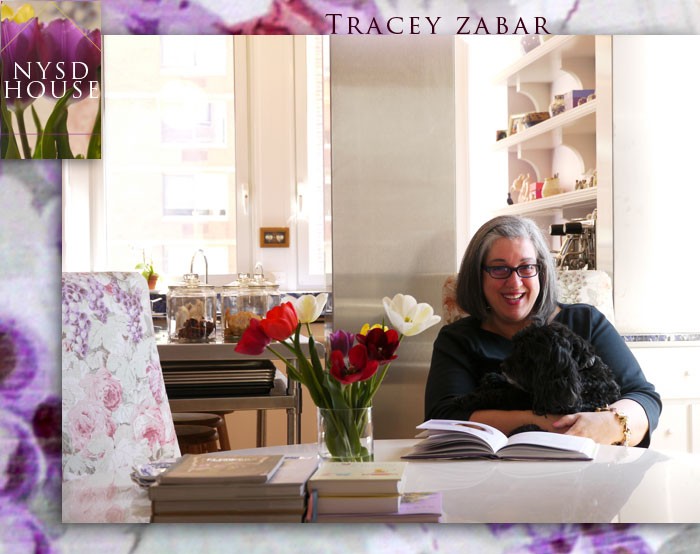
APRIL 27, 2012
HOUSE• BY: SIAN BALLEN, LESLEY HAUGE AND JEFF HIRSCH
Well we did say that we were going to share the cookies that Tracey Zabar baked for us with our kids—and we meant it—but somehow it just didn’t happen. Later that evening, we exchanged guilty emails about gorging. Oh my! They were good. Tracey is among other things, a trained pastry chef and her new book, ‘One Sweet Cookie’ (Rizzoli) has just come out. It contains recipes from well-known chefs and talented bakers, all of whom have submitted their favorite cookie recipe often accompanied by a little story as to why the particular recipe is special to them. Cookies and childhood are inextricably linked, it would seem, even for grand names such as Danny Meyer and Jacques Torres. If you don’t already know, his chocolate chip cookie should win some kind of baked goods Nobel prize and it’s in the book!

Now, you have been known to swipe cookies from places and put them in your purse …
You mean from what I wrote in the intro in the book? But I didn’t swipe the cookies. I wanted to.
Oh! I actually take the cookies and put them in my purse.
Now the terrible thing is that everybody kind of knows me … the nice thing is that the pastry chef will come and say hello and I’ll get little goodies but the not-nice thing is that because everyone knows me, even though I want to lick the plate and take the cookies, I can’t.


I don’t really like cooking very much but I really like baking – there just seems to be a separate pleasure to baking. Can you tell me what you think that might be?
What’s interesting to me is that people say, “I’m a tremendously good cook but I’m a terrible baker, or the other way around. I think when you bake you have to be very precise. You have to follow the directions, make no substitutions … at the beginning. When you become experienced as a baker and also experienced with that recipe, you understand where you can improvise and where you cannot. It’s very, very precise. With cooking, it’s not … you can add a little more spice or maybe some wine or a little butter …
And yet people are frightened of baking. You’d think the precision would make them more secure – you just follow the directions to the letter.
People may have had the experience that they have screwed up. I also think there has been this explosion of fancy desserts in restaurants and I was very specific with this book that this was not what I wanted. I didn’t want a foam infusion of grapefruit and olive oil and something I couldn’t identify. I wanted a cookie or a little cake. I wanted the best brownie in the world.




What kind of pleasure are you hoping to give? A kind of Proustian madeleine moment I guess?
I think that’s a tremendously important thing for people to think, “I never thought I would taste that again.”
Baking is the ultimate home smell … the smell of security.
I think it is. And what I did with the book was that I went to these chefs, some very important and some not important, some people I just knew were amazingly talented bakers and I said, “Tell me what your favorite cookie is. I want to know when you’re home on a Sunday and you’re with your family and you want to bake something, what do you bake?” Most of them made [their cookies] from their childhood, you know, Daniel Boulud talking to me about his mother and his grandmother. That was very charming to me.





Cookies are humble things—they’re the first things you learn to bake.
And it’s the thing that’s in your lunchbox.
They’re very American. Although I suppose tea with biscuits is very English as well.
Well when I researched this they were first called teacakes. They started out as little cakes. I went to a very famous Chinese chef and he said nobody makes cookies at home in China. Fortune cookies are from American restaurants.



And there are hard cookie people and soft cookie people.
There absolutely are.
I have a cookie every morning when I wake up. My husband brings me a cup of tea and a cookie while I’m still I bed, although they’re British “biscuits” really.
What kind of cookie do you have?
This morning I had two chocolate digestives but normally they’re plain wholemeal digestives.
That’s like schoolhouse biscuits.


When do you like to eat cookies?
Well, through this book … I didn’t. I didn’t want to come to the end of the project and really hate cookies so I would make one batch or two batches every day. I would eat one cookie from each batch. I would put a few away for David and the boys and then I would walk down the street with a bag, doorman … doorman … homeless person … I gave away maybe 10,000 cookies.
So what were your favorites?
Cookies or the [chefs’] stories? It really became a beautiful collection [of recipes] but I was interested in the stories. I’ll tell you one favorite story. It’s actually Scottish, from Mark Tasker who is the baker at Balthazar. They don’t give their recipes out but Mr. McNally was very kind. And this is Mark’s Granny Rennie’s shortbread. During the war they had to go into the air raid shelters and she would make this shortbread as treat for [his mother and her siblings] only when they went there so that they wouldn’t be scared. He said they had to wear gas masks, so he wondered how they ate the shortbread.
That is a nice story. So what is your attitude towards … well, sugar?
I’ve known people who have forbidden their children to eat any sugar and it is disastrous. Everything in moderation. Me personally, I think you should have one of the most perfect cookies, or the most perfect little tart. Just eat it and love it and enjoy it.


Did you or do you give your kids dessert every day?
Yes. Sometimes it was fruit and sometimes cookies. What we always did [when all four boys were at home] was leave work early, or I would only work when the kids were in school and we’d come home at four o’clock. And we would make a big platter of fruits and vegetables, mostly vegetables, celery, little tomatoes, we’d put nuts and cheese on it and we would put that on the table while we were in the kitchen making dinner, which would be ready by six o’clock. By the time dinner came, everyone had had a huge amount of vegetables because they were hungry and that’s what was there.
Do you cook as well?
A little bit. David cooks.
And a favorite chef?
I will never say. They all know where I live and they would come and kill me.
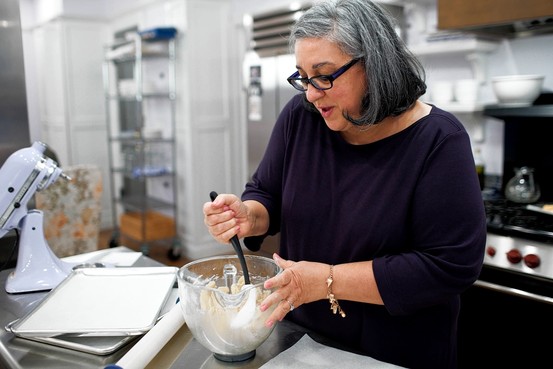
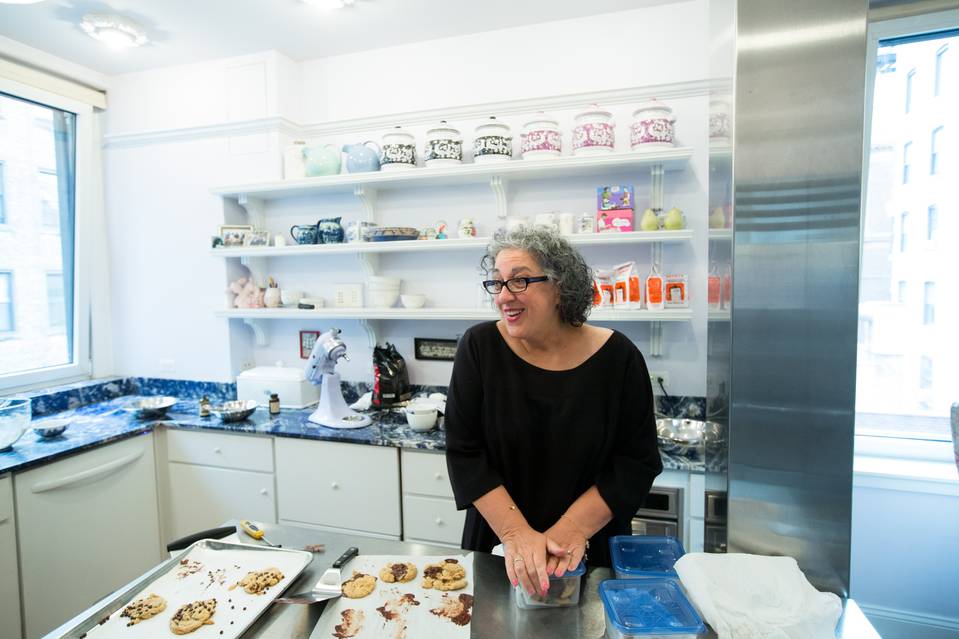
Tracey Zabar prepares cookies at her home on the Upper West Side. Her new book, ‘One Sweet Cookie,’ features favorite cookie recipes from 70 of the city’s most famous chefs. BRYAN DERBALLA FOR THE WALL STREET JOURNAL
I was somewhat concerned when Tracey Zabar told me we had to meet by 11 a.m. because she had a photo shoot with a rival newspaper at noon. I understood, of course, but simply as a matter of personal and journalistic pride I prefer to avoid getting scooped.
Bryan Derballa for The Wall Street JournalTracey Zabar prepares cookies at her home on the Upper West Side. Her new book, ‘One Sweet Cookie,’ features favorite cookie recipes from 70 of the city’s most famous chefs.
However, I was relieved to learn that they were photographing her for an entirely different project. My interview concerned her new book, “One Sweet Cookie” (Rizzoli), for which she asked 70 of the city’s most famous chefs to supply their favorite cookie recipes; they were talking to her about an earlier volume devoted to charm bracelets.
I frankly didn’t know that much about Ms. Zabar going into our meeting at Dominique Ansel, a bakery on Spring Street owned by Daniel Boulud‘s former pastry chef. (Mr. Ansel supplied the book a recipe for pecan and chocolate cookies; Mr. Boulud gave two recipes—for Trao-Mad, a buttery cookie from Brittany with peach compote; and for Bugnes De Lyon, some sort of cruller-like butter- and sugar-delivery system made by his mother and typical of Lyon, his hometown.)
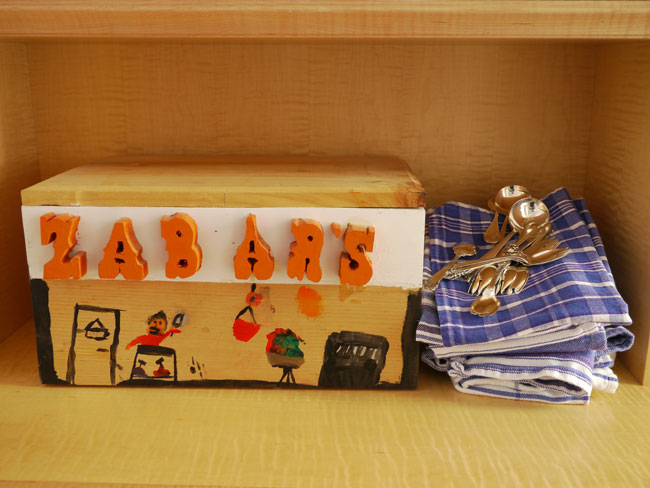
I first learned about Ms. Zabar when her publicist and father-in-law, Stanley Zabar, one of the owners of the Zabar’s gourmet-food empire, slipped me a postcard with a picture of the book on one side and a recipe for Sugar Valentines on the reverse. We were attending a live broadcast of Jonathan Schwartz‘s WNYC Christmas show. I was listening to Mr. Zabar with one ear and trying to take in Judy Collins, or whoever it was serenading Mr. Schwartz and his audience, with the other.

Tracey Zabar prepares cookies at her home.
Bryan Derballa for The Wall Street Journal
It turns out that Ms. Zabar has her hand in many pots, only a few of them containing sugar and shortening. She’s also a jewelry designer and collector, and she’s written or co-written books on subjects as varied as baby names and flower arranging. She’s not trying to find herself; apparently, she’s just passionate about lots of different things simultaneously, or at least in rapid succession. By the way, she and her husband, David Zabar, who helps run the family business, also have four sons, ranging from age 30 down to 18.
Whatever she is, she’s not without ambition. “I’m not a chef or baker by profession,” she explained as she plied me with one of Mr. Ansel’s DKA, short for Dominique’s Kouign Amann. It resembles a caramel-coated croissant and ought to be on everyone’s bucket list. However, she added: “I’m an amazing baker. I know I am.”
Ms. Zabar’s charm is that such lines usher from her mouth sounding almost modest, so infused are they with enthusiasm for whatever it is she’s discussing. “My goal,” she added, “is if you find a chocolate-chip cookie recipe, you want to make a chocolate chip better than anybody in the world and then you’re done.”

Tracey Zabar prepares cookies at her home.
Bryan Derballa for The Wall Street Journal
Indeed, the first recipe she got for her book was Jacques Torres’s celebrated chocolate chip. “It was such a good recipe I went to the other chefs and said, ‘Give me other recipes, not chocolate chip unless it’s your favorite.’ I potentially could have had 70 chocolate-chip cookie recipes.”
Ms. Zabar explained the genesis of “One Sweet Cookie.” “I knew so many chefs,” both through previous writing projects and because one apparently tends to cross paths with lots of them if you’re a Zabar; sort of the way you would world leaders were your name Clinton or Kissinger. “I’d wanted to ask them, ‘When you go home, what do you bake on a Sunday when you have the day off and your kids want something?’ I didn’t know if chefs made these fabulous concoctions with foam infusions of olive oil and grapefruit. I didn’t think that’s what those chefs made at home.”
Initially, Ms. Zabar said that she was worried about gaining their cooperation. After all, in the contemporary celebrity firmament famous chefs rank right up there with Lady Gaga and Nicole Kidman, actually probably slightly higher than Ms. Kidman. But the Zabar name and the opportunity to share recipes that meant something to them personally opened doors—such as the one from Mr. Boulud’s mother’s; there seem to be several maternally inspired cookies and cakes in the volume. “I didn’t think anybody would say yes,” she confided. “I thought I’d get 20 recipes. I was shocked. Three said no, but 70 said yes.”

Tracey Zabar prepares cookies at her home.
Bryan Derballa for The Wall Street Journal
Bryan Derballa for The Wall Street JournalTracey Zabar prepares cookies at her home.
And she wasn’t shy about sharing her own recipes if she thought there were holes in the compendium. For whoopie pies, for example. “There’s only one traditional whoopie pie,” stated Ms. Zabar, who grew up in New England, home of that All-American treat. “Even though people have done carrot cake and gingerbread, it’s traditionally chocolate with a marshmallowy center.”
I couldn’t agree more. A whoopie pie made of anything other than chocolate cake with an achingly sweet cream filling is a sacrilege. But what about peanut butter whoopie pies? They seem to be everywhere. “A bastardization,” Ms. Zabar pronounced.
That doesn’t mean she’s against peanut butter in general as a cooking ingredient. “I wanted there to be at least one peanut butter recipe in the book,” she said. So she hit up Marc Murphy of Landmarc at the Time Warner Center for his peanut butter sandwich with nutella filling. If the accompanying photo is any indication, it’s to drool for.
Ms. Zabar didn’t want to offend any of the souffléd egos in the book by picking her favorite recipe—among the superstar chefs included are Andre Soltner, Francois Payard, Waldy Malouf, Sarabeth Levine, Marcus Samuelsson, Mario Batali and Jean-Georges Vongerichten. Instead, she cited the special place in her heart reserved for her own mother’s recipe for Pizzelle, snowflake-shaped cookies for Italian brides, and Eli Zabar’s mother’s butter sugar cookies. “If I ever said what my favorite was the other chefs would come to kill me,” she said.
Ms. Zabar tested all the recipes herself in her own kitchen, reducing what were often restaurant metrics to those for the home baker. “I got to bake every single day for a year,” she said. “I’d eat one cookie from each batch and save a few for David and the kids and I’d take the dog for a walk and give them to anybody—doormen, homeless people. The problem is now when I walk the dog people will say, ‘Where are my cookies?’ I’m obligated.”
Ralph Gardner Jr. and Tracey Zabar whip up a batch of overdose chocolate-chip cookies
Nov. 8, 2015 7:43 pm ET
There are several skills I wish I possessed, suspecting my survival might some day depend on them. These include starting a fire from scratch; mastering the rudiments of home repair—plumbing, carpentry, electricity; being able to diagnose what is wrong with my car, and making a foolproof chocolate-chip cookie.
You may scoff that I include chocolate-chip-cookie mastery in my pantheon of competencies. Or should that be pantry of competencies? But I think we can all agree that this taste treat occupies a unique place in the culinary universe. With perhaps a world-class oatmeal raisin cookie running a not-too-distant second.
I suspect that were you to match a superior chocolate-chip cookie against pretty much anything else you may have the occasion to pop in your mouth, you’d discover that it lights up more of the brain’s circuitry than any other confection.
It probably boils down to its simplicity, to the yin-yang of baked dough and chocolate chips; the dough, or cookie part, serving two functions, at once complementary and competitive.
On the one hand, that gleeful combination of flour, butter, eggs and sugar acts as an unparalleled chocolate delivery system. But on the other, it serves as the taste equivalent of a nightclub bouncer, stalling you behind the velvet rope and only occasionally giving you the green light to enter that Studio 54 of the senses.
That happens when you’re lucky enough to land a bite with the perfect ratio of cookie to chips.

And while there are few things in life as affecting as an excellent chocolate-chip cookie, there are also few items as capable of quickly sending you, or at least me, into a funk of despair as a chocolate-chip cookie that fails to live up to expectations.
For example, pretty much any such cookie I’ve baked myself.
I’m not sure what my problem is. But the cookies almost always emerge from the oven too dry, almost biscuit-like, and I’m being unfair to biscuits.
So last week I decided to consult the nutritional equivalent of a Freudian psychoanalyst about my cookie issues— Tracey Zabar, a baker and author of a new book that suggests she gets my obsession with chocolate chips.
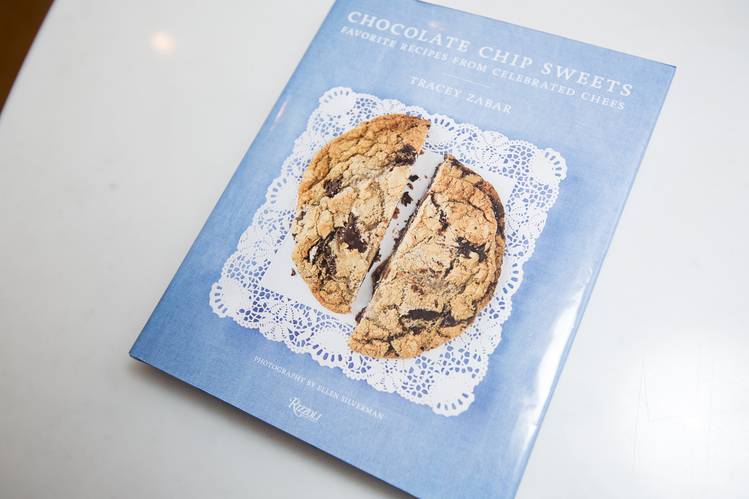
It’s called “Chocolate Chip Sweets” (Rizzoli) and includes recipes from celebrated chefs, ranging from Jacques Torres’ overdose chocolate-chip cookies to chocolate-chip brioche doughnuts from Laurent Tourondel of Brasserie Ruhlmann.
“You’re probably using too much flour,” Ms. Zabar told me when we got together to bake the Jacques Torres recipe in her airy Upper West Side kitchen. “Do you put [in] the flour [as] the last thing before the chocolate chips?”
I can’t say I do. Though I was pleased to see we were on the same page when it comes to chocolate. In other words, there’s no such thing as too much. Or at least a lot.
Indeed, Ms. Zabar, who is married to David Zabar—her husband helps run the eponymous family food empire—had stockpiled chocolate in three forms: traditional chocolate chips from Ghirardelli, large Valrhona chocolate lozenges and some sort of tiny chocolate pearls.
I resisted the impulse to toss all three into the mixing bowl together, instead joining Ms. Zabar as she made three separate batches of cookies, using a different sized chip in each batch. Then she deposited the raw, chocolate-laden dough onto parchment-covered baking sheets, using stainless steel scoops for quantity control.
Conversation is a lovely perk of cooking with another person. So, as the cookies baked, I decided to ask Ms. Zabar about a subject that has been troubling me lately: her opinion of Levain Bakery’s bacchanalian chocolate-chip walnut cookies.
For those who are unfamiliar with them, they are sold hot out of the oven and are approximately the size of a Fiat Cinquecento.
“Anybody who uses all-natural ingredients and makes hot cookies is great with me,” Ms. Zabar said.
Me, too.
But I’m wondering whether I’m responding to the artistry of the cookie making, or to the sheer mass and lava-like flow of the chocolate?
Does the experience circumvent my ability for rational thought? In other words, am I being brainwashed?
Ms. Zabar answered my existential question with one of her own, as she pulled her cookies from the oven:
“They’re not the most beautiful,” she conceded. “Do we care? Why would we care?”
We wouldn’t.

BY LYNN YAEGER
JANUARY 20, 2012 11:30 AM
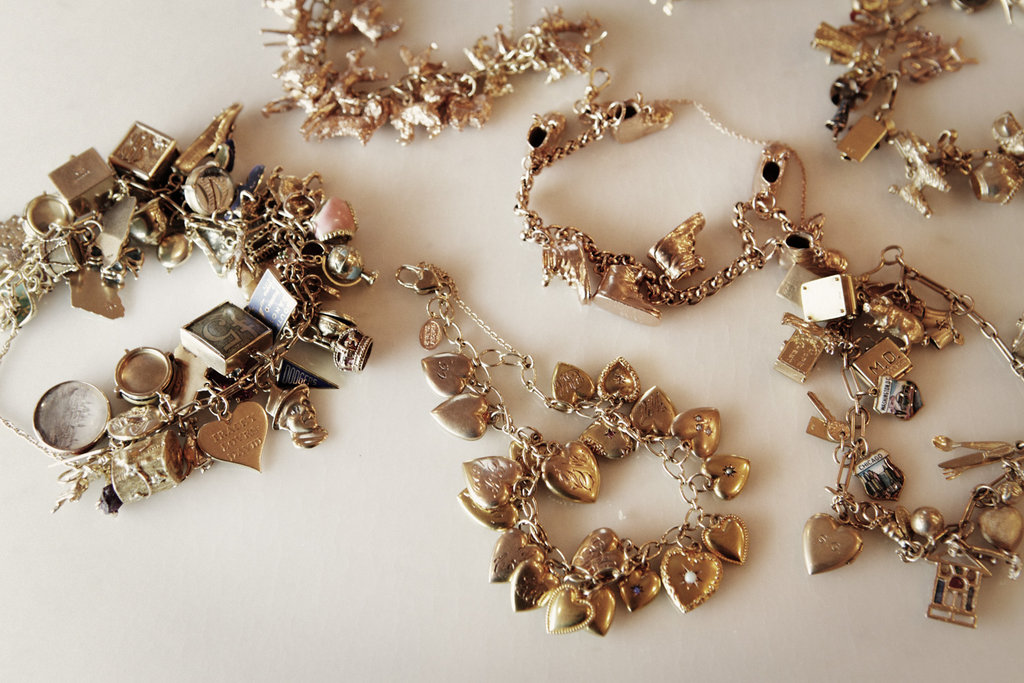
“The poodles are always getting caught in the underpants,” Tracey Zabar says, untangling the charms on a vintage bracelet — one of oh, maybe around 65, that she possesses.
It’s no surprise that Zabar, the author of the delightful “Charmed Bracelets,” has these bibelots, but in fact her exquisitely curated collectibles roam far beyond jewelry.
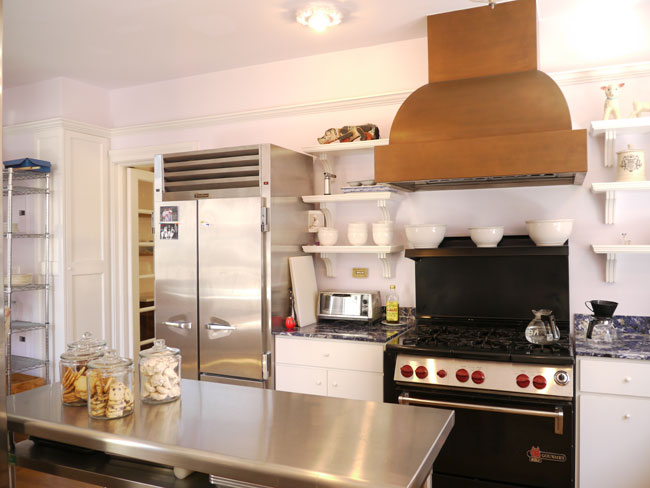
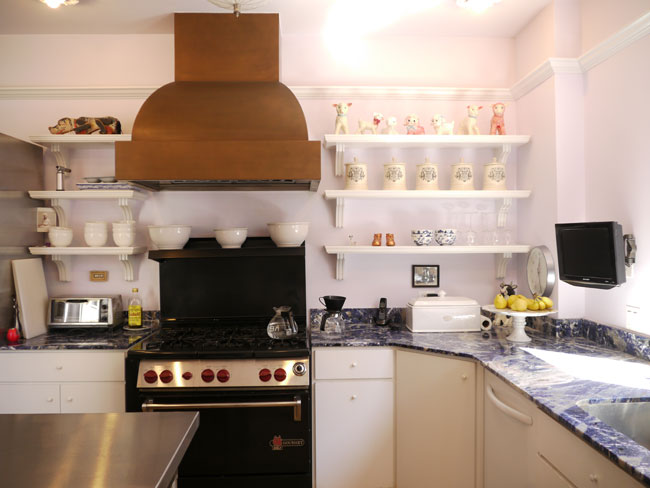
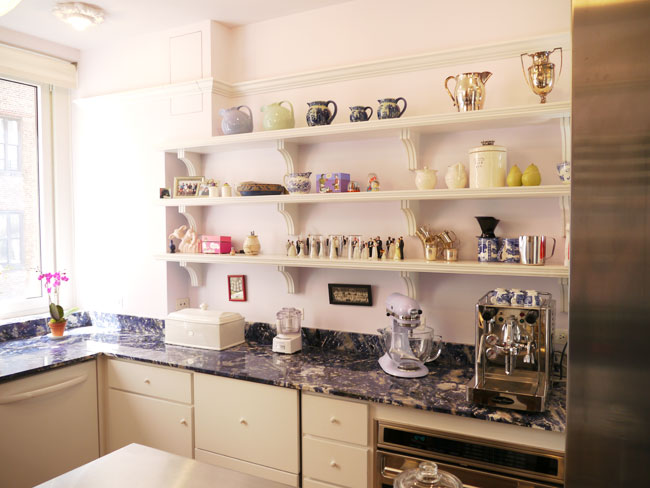
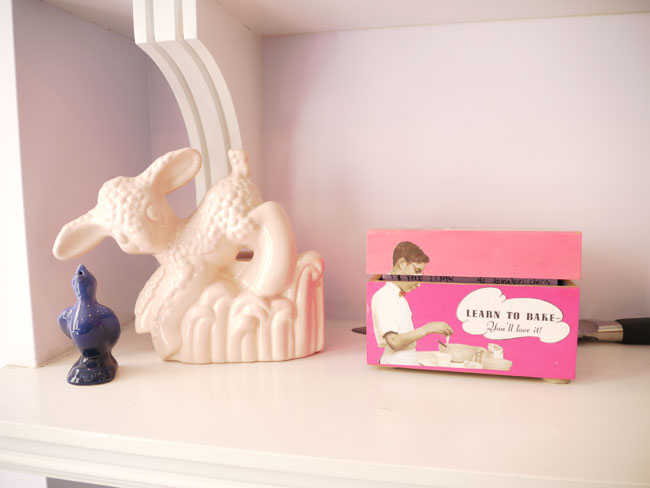
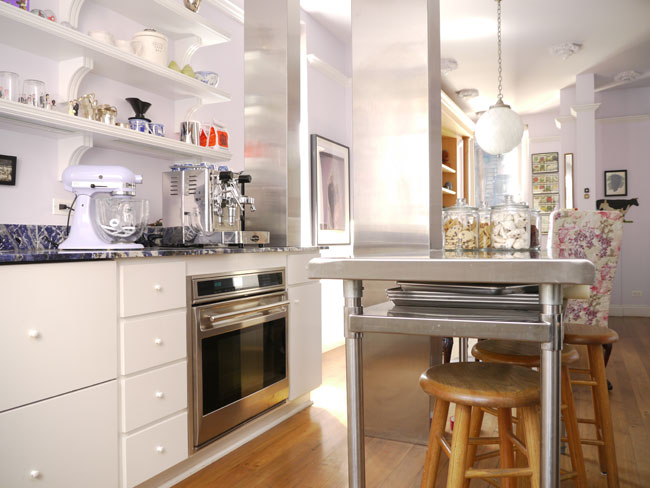
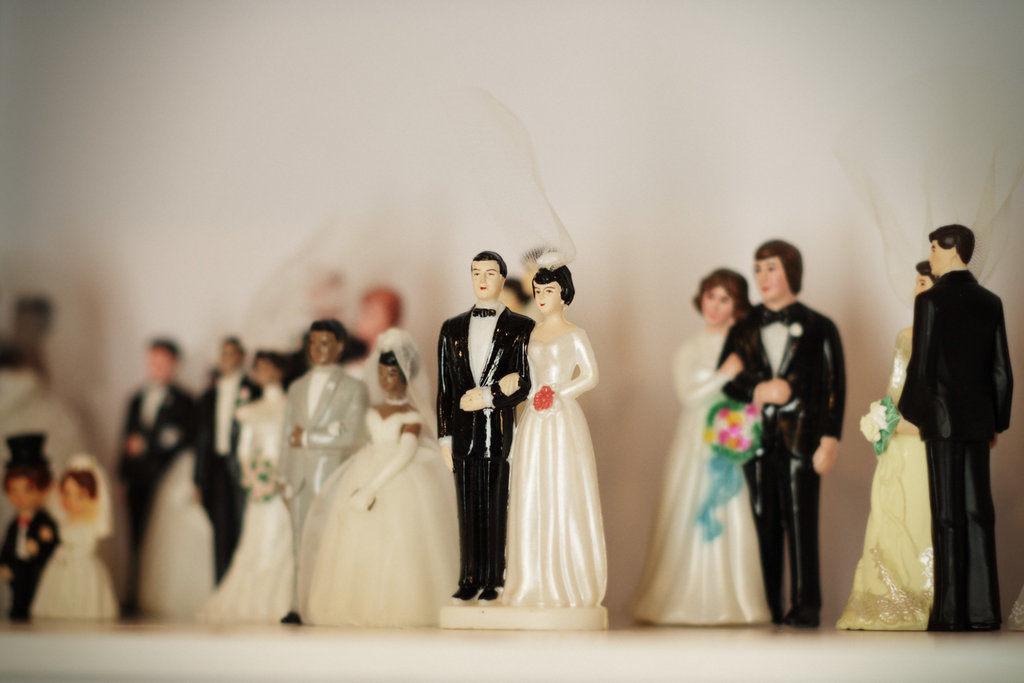
Because it is so well ordered, you may not at first realize the wealth and depth of the collections she keeps in the Upper West Side home that she shares with her husband David, grandson of the renowned gourmet-grocery founder. A panoply of panoramic photographs hangs over the sofa (some authentic Zabar family heirlooms, others imaginary ancestors acquired at the flea market); a kitchen shelf offers a flock of lamb planters (originally centerpieces of baby-gift floral arrangements); drawers open to reveal a welter of wedding cake-top figures (bought as party favors for a bridal shower, but then no one took them home). “At one point I was going to do a book of vintage photos of ugly brides and bridegrooms, but I decided it was too mean,” she confesses.
Zabar, an author, jewelry stylist and baking fanatic, says that she accumulates like a maniac in a particular category, then considers the project closed and moves on, and that these days, she isn’t really buying anything at all. (But can this be true? If so, then why is there a still an eBay search for “Flow Blue china” in Zabar’s computer? And why does she say with a shrug, “If I walk in somewhere and someone has an amber type, it’s not like I’m not going to buy it.”)
There was a sea change in her habits when the family (they have four sons) moved to this apartment four years ago. “Moving was seismic! I wanted everything to be very organized here. Now I’m crazy about closets.” Opening a cabinet, she reveals 20 or so Santa mugs — “I like multiples”; a group of signed baseballs her boys used to love; a trove of silver baby cups with other people’s names on them (she has also authored a book entitled “Best Loved Baby Names”) and a complete set of Charlie Brown drinking tumblers because, “how could you not buy them?”
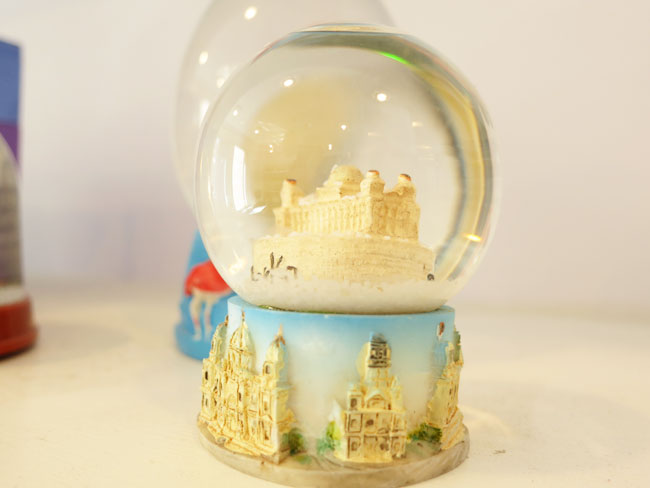
Another case holds a vast array of daguerreotypes, many depicting little girls, a collection that Zabar, who is not at all a braggart or a showoff, quietly describes as museum-worthy. Less rarefied but equally beloved are the contents of a splendid breakfront in the dining room: roughly 350 snow globes — all 50 states and other locations, including an ultra-rare Cuba. (Just as well that this collection is completed, since you can no longer bring these things on a plane.)
Unlike so many collectors, Zabar isn’t afraid to edit. Her cookbook collection — her own most recent book is “One Sweet Cookie” — used to run to 500 volumes. “I still buy cookbooks every week, but for every one I buy I give five away. I’ve given 600 away already!”
On the other hand, she isn’t in a rush to part with an enormous cache of flimsy vintage recipe pamphlets, a century’s worth of supermarket giveaways. “I have close to 100 booklets. Sometimes when I get them I am a little grossed out because they sort of smell,” she admits, fondling their faded covers. “But I always have this fantasy that they are going to have great recipes.” And do they? “Never.”
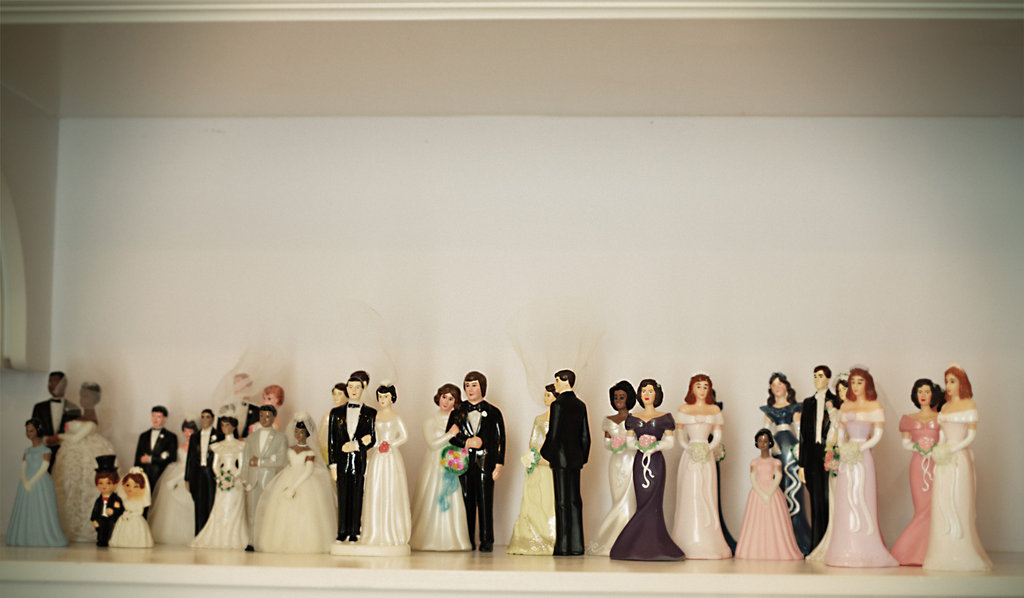
Her collection of wedding cake-top figures.

Vintage cookbooks.

Her snowglobes number roughly 350.

The porcelain lamb planters.

Zabar, who is the author of “Charmed Bracelets,” has more than 60 of them.
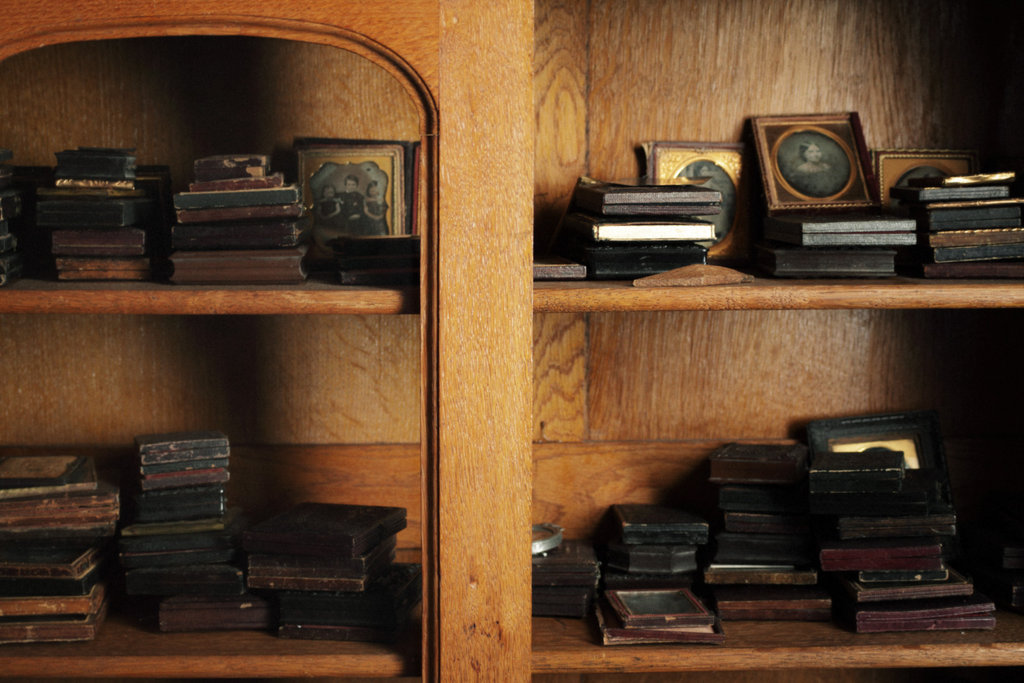
Her daguerreotypes form a collection that Zabar says is museum-worthy.

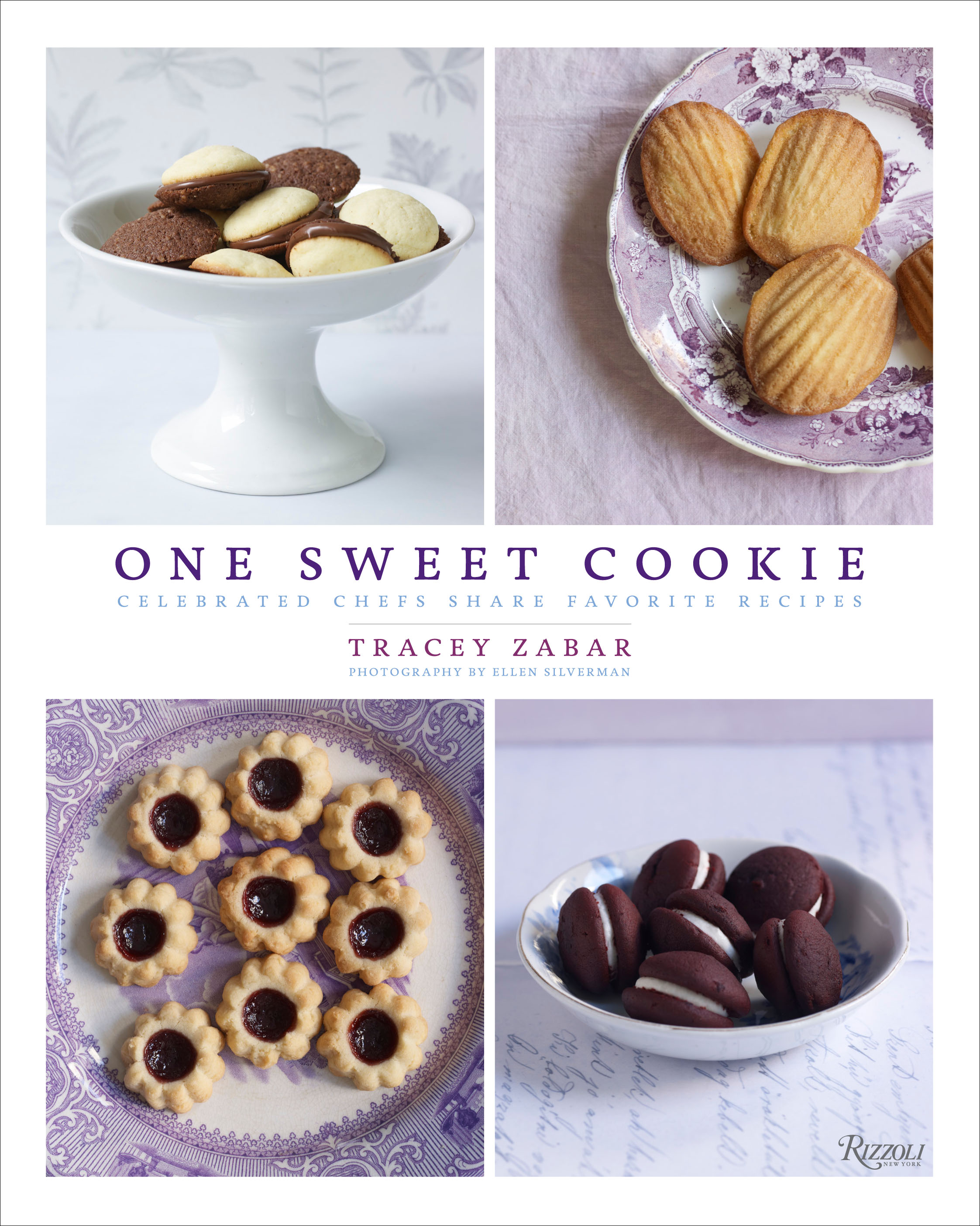
One Sweet Cookie has just been rereleased at a great price. Get one while they last!

Tracey Zabar sells antique engagement rings only to clients who are referred to her.


 Tracey Zabar